
Admittedly, I’m biased.
I own a case management system, Jove, that does not claim to be an all-in-one AI personal injury case management system. (That said, I’m not sure anyone truly has one. More on that later.)
But I also own a large personal injury firm in North Carolina, the Law Offices of James Scott Farrin, with more than 10,000 active cases. Technology is our lifeblood. It’s the only way we can give that many people the attention and quality of work they deserve.
We’ve also leaned into AI harder than most. Our primary AI provider, Eve, tells us we’re one of the leading firms in the country in AI usage, and that matches what I hear from owners of similar-sized firms.
And while technology matters a great deal to me (my wife is beginning to side-eye my relationship with Claude), I don’t consider myself a highly technical person. I’m a lawyer and a business owner. I sometimes hesitate to opine on where AI is headed in our space.
Still, a few things seem obvious to me as a business person. And they lead me to be wary of any vendor promising to handle everything with AI under one roof.
Three things that are obvious to me as a business person
1) AI is evolving fast, and the winners haven’t been decided
In a short period of time, frontrunners in the AI space (Gemini vs. Claude for example) have changed more than once. The tools keep leapfrogging each other.
The model that’s best today may be second or third best in six months. A new one may come out of nowhere. Prices change, features change, and companies change direction.
That’s exciting. But in my opinion, it means no one should bet the core system that runs their firm on today’s leader.
2) Many AI companies are losing money, and eventually they’ll want to get paid
The companies building the major AI models are spending enormous sums on computing power. OpenAI, for example, has reportedly told investors it doesn’t expect to turn a profit until around 2030.
I don’t say that as a criticism. Building something this transformative is expensive. But as a business owner, I know what happens next. At some point, investors expect a return, and prices go up.
That’s fine if you can shop around. It’s a problem if you can’t.
3) Most personal injury AI tools are built on top of a handful of base models
The AI products being sold to law firms today aren’t building their own AI from scratch. They’re built on top of models from companies like Anthropic (Claude) and OpenAI (ChatGPT).
There’s nothing wrong with that. Some of the best tools we use work that way. But it means we have to pay close attention to what those base models do. Their pricing, their policies, and their performance flow downstream to every product built on them.
It also means there are often two companies in the chain that need to get paid.
Is there really such a thing as all-in-one AI personal injury case management?
If the three points above are true, I don’t think there is.
What’s usually being sold as “all-in-one AI” is case management software built to use one AI model, or one vendor’s version of it, across every part of your business. Intake, case work, demands, reporting, client communication: all running through the same engine the vendor picked.
That creates a few problems.
You inherit their model choice. When a better model comes out, you wait until your vendor decides to switch, if they ever do. Your firm moves at their pace, not yours.
You lose your leverage on price. Remember point two. When the AI companies raise prices, that cost lands on your vendor, and your vendor’s margin sits on top of it. If your data, your workflows, and your AI are all locked in one system, you can’t easily walk away. That’s a recipe for lock-in and, eventually, price gouging.
You get one tool’s strengths and one tool’s weaknesses everywhere. No single model is the best at everything. The AI that writes a great demand may not be the AI that spots patterns in your intake data.
To be fair, all-in-one systems have real appeal. One vendor, one bill, one login, one number to call – that simplicity is worth something.
Heck, we originally marketed Jove (formerly known as GrowPath) as an all-in-one system (which for us at the time was intake, case management and reporting), back when it wasn’t cool. And only recently made the pivot.
One thing to consider though: as legal tech companies race to add features, many products are bloating quickly. More buttons, more modules, more line items. All-in-one can quietly become all-of-it-whether-you-need-it-or-not.
And then your wallet suffers.
The danger no one talks about: hallucinated data
Most lawyers have heard about AI making up fake case citations. Fewer are thinking about AI making up facts inside their own case management system.
Here’s the risk. When AI writes directly into your system of record, a mistake doesn’t stay a mistake. A wrong date of loss, an invented medical bill, a misread policy limit becomes a “fact.” It flows into your reports, your demand, your settlement decisions, and your statute of limitations tracking. Six months later, no one remembers that a machine guessed it.
In a personal injury practice, that’s not a technology problem. That’s a client problem, a malpractice problem, and potentially an ethics problem.
The fix is not to avoid AI. It’s to keep a clear line between two things:
- Your system of record, which holds the facts of your clients’ cases and should be as clean and trustworthy as possible.
- Your AI tools, which read from that system, do their work, and suggest updates that a human reviews before anything is saved as fact.
When everything lives in one all-in-one box, that line gets blurry. When your core system is separate from the AI layer, it’s much easier to keep.
Which AI is best for personal injury law firms?
My honest answer: it depends on which part of your business you’re talking about.
For case work: AI built for personal injury
I believe AI tools built specifically for personal injury, like Eve and Supio, are the best choice for case work. That’s true today and probably will be for a while.
Their output is consistently better for things like medical record review, chronologies, and demands, because they’re trained and tuned for exactly that work. And we can be confident our clients’ data is protected, including that it isn’t being used to train their models.
One caution: because these tools are built on base models, there are two companies in that chain that eventually need to get paid. Costs could rise meaningfully in the future. That’s one more reason to keep your options open.
For running the business: a general-purpose model
As much as I love our personal injury AI, I find Claude to be a much better option for business pattern recognition and reporting. Where are cases getting stuck? Which marketing sources produce the best cases? Which teams are trending up or down?
With enterprise accounts now available, we’ve reviewed the terms and are confident our firm’s data is protected there too. (Read those terms yourself before you put client data anywhere. A consumer account is not the same thing.)
The real lesson: use the best tool for each job
The best AI for intake may not be the best AI for demands, and neither may be the best AI for your Monday morning numbers. And the best tool in each category will probably change.
Which brings me to how I think a personal injury firm’s technology should be built.
Why I believe in hub-and-spoke (and what it has to do with your car)
Remember when cars came with built-in GPS? It was terrible. Navigation technology changed quickly, and no one wanted to replace their car every few years just to get better maps.
Then carmakers figured it out. They built a dashboard you could plug your phone into, so you could bring whichever navigation app was best that year. The car stayed. The app could change.
(Credit to Larry K., our head of engineering at Jove, for that analogy. It’s the clearest way I’ve found to explain this.)
I think law firm technology should work the same way. That’s what people mean by a hub-and-spoke approach:
- The hub is your case management system. It should be durable, reliable, and built to house and protect your client data for years.
- The spokes are the tools that change quickly, especially AI. You should be able to plug in the best one for each job, and swap it out when something better comes along.
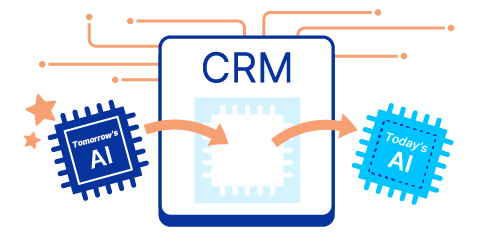
Some case management providers are moving the other way, closing down integrations with outside AI tools because they see them as future competition. I understand the business logic. But I don’t think it serves the firms paying the bills.
What this looks like in practice
The technology that makes this possible is getting better fast. One example is MCP, or Model Context Protocol. It’s an open standard that lets AI tools like Claude, ChatGPT, and Copilot securely connect to the software you already use.
In car terms, MCP is the dashboard you plug your phone into.
With it, you can ask your AI a question in plain English and get an answer pulled directly from your case management system. No exporting, no copying and pasting, no hoping nothing gets lost along the way. Imagine asking, “Which of my cases will hit their statute of limitations in the next 90 days and don’t have a demand sent?” and getting the answer in seconds.
At Jove, our MCP is planned for release in Q1 2027. Information will flow both ways, so you can use your case data in the AI tool of your choice and push the results back in if you choose. But whatever system you choose, I’d ask any vendor: can I connect the AI I want, or only the AI you picked?
AI pricing: you can’t control what you can’t see
AI can get expensive fast, and often quietly.
Unlike most software, many AI features cost money every time someone uses them. A summary here, a chronology there, a few hundred team members clicking “generate” all day. Multiply that across a large firm and the bill can surprise you.
That’s why I’m wary of AI pricing that’s bundled, vague, or buried. If an AI feature is “included,” someone is still paying for it. Usually it shows up later as a higher subscription price, a new tier, or a line item you didn’t see coming.
I’d rather see exactly what I’m paying for, so I can decide what’s worth it. A few things I look for:
Clear visibility into usage. Who’s using which AI tools, how much, and what it’s costingso one enthusiastic user or one runaway process doesn’t blow up the budget.
- The ability to turn things off. If a built-in AI tool isn’t earning its keep, I want to switch it off without breaking anything else.
- No surprises at renewal. Honest, fair pricing that doesn’t depend on locking me in first.
At Jove, we took this seriously enough to build it into the product. Firm admins can see how much each person is using AI, so they can make adjustments if needed. It’s one more way we’re trying to keep pricing honest and transparent.
Whatever you choose, ask your vendor to show you where you’d see your AI costs. If they can’t, that tells you something.
AI is an ethics issue, not just a technology issue
For law firm owners, the stakes around AI aren’t only about cost and efficiency. Our license is on the line.
The American Bar Association made that clear in July 2024 with Formal Opinion 512, its first formal ethics guidance on lawyers using generative AI. It applies rules we already know to this new technology: competence, confidentiality, communication with clients, candor to the court, supervision, and reasonable fees. A growing number of state bars have issued their own guidance, much of it tracking the ABA’s. Your state’s rules are the ones that bind you, so know them.
In plain terms, a few things stand out:
- You need a reasonable understanding of how the AI tools you use work, including their limitations.
- You’re responsible for protecting client confidentiality in every tool you use.
- You must review AI output before relying on it. A fabricated case or fact is your problem, not the software’s.
- You’re responsible for supervising how your lawyers and staff use AI.
And courts are enforcing this. According to an ABA GPSolo article, a database tracking AI hallucinations in court filings had logged nearly 1,400 U.S. cases by May 2026, many ending in monetary sanctions. That count includes filings by self-represented litigants, but plenty involve lawyers. Earlier this year, a federal judge in Mississippi sanctioned all four lawyers on both sides of a civil case after filings cited fake cases.
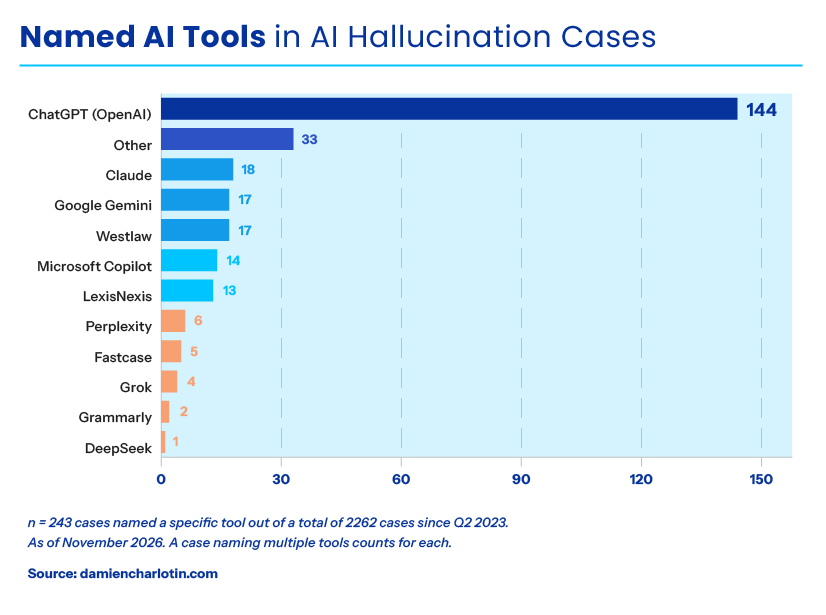
I expect discipline for AI misuse to keep increasing. That’s not a reason to avoid AI. It’s a reason to be deliberate about how your firm uses it.
Every firm needs an AI use policy (here’s ours)
If your team is using AI, and I promise they are whether you’ve approved it or not, you need a written AI use policy.
Without one, every employee is making their own judgment calls about what’s safe to put into which tool. That’s how client information ends up in a free consumer chatbot, and how an unverified AI draft ends up in front of a judge.
A good policy doesn’t slow adoption down. In our experience, it speeds it up, because people know what’s allowed and stop worrying about getting it wrong.
Ours covers, among other things:
- Which tools are approved, and how employees request approval for new ones.
- What can and can’t go into AI tools, with a clear rule that client information never goes into publicly available, consumer AI tools.
- Human review, so AI-generated work is checked by a person before it goes to a court, a client, or opposing counsel.
- Verification, so every citation and factual claim is independently confirmed.
- Limits on use, including no AI for employment decisions and no automated client communications that could be read as legal advice.
- Client restrictions, with a maintained list of clients who have limited or prohibited AI on their matters.
- Supervision and accountability, including when non-attorney staff need to tell a supervising attorney they’ve used AI.
- Training, reporting, and regular review, because the technology and the rules keep changing.
We’ve made our policy available as an example for other firms. Download our AI use policy here. Adapt it to your firm, your state’s rules, and the tools you use. And have your own counsel review it before you adopt it.
What actually made AI adoption work at our firm
Buying AI tools is the easy part. Getting a firm of our size to use them well is harder.
Here’s what made the difference for us:
- Leadership went first. We created a group of power users, including department and operations leaders, to test and guide our implementation process. When the people at the top model it, everyone else takes it seriously.
- We built candy. One of the early things our power users did was to figure out how to solve a headache with AI for each department. Something that would have them salivating to get in and try it. And they built playbooks accordingly.
- Clear rules up front. Our AI use policy and AI committee gave people permission to experiment, inside guardrails. We also let them know we expected them to use it, and would be monitoring their usage.
- Every win shared. We established a process to identify great LLM uses and a way to highlight them regularly. This rewarded people’s creativity and inspired others.
We shared much more of this in a webinar we hosted with Eve on how to implement AI at a personal injury firm. Eve told us it was their best webinar ever. See for yourself! [Watch the recording here.]
Which personal injury case management system is best?
Again, I’m biased. But the reason I’d recommend Jove is something I’m not hearing from anyone else:
Clean, usable data is the foundation for everything AI does next
AI is only as good as the information it can reach.
If your case details are buried in fields your favorite LLM can’t access, it’s virtually useless. Or if they’re stuck in long notes or free-form text fields, even the best AI has to guess. That’s where hallucinations creep in.
Jove was engineered so that nearly every field can become clean, structured data. That’s an absolute game changer for what’s coming in AI. It means any AI tool you connect can pull clean data easily and answer real questions about your firm.
Go back to that statute of limitations question. An AI can only answer it in seconds if “demand sent” is an actual data point in your system, not a sentence somewhere in a case note.
And if you think configuring your system to access these data points would take hours from say, a Salesforce developer or VineSkills specialist, guess again! Jove was built so you can run your firm your way, and that means it’s easily configurable by any person you choose.
What about Jove’s own AI?
Fair question. Jove does have built-in AI tools, including AI Summaries, Case Chronicles, and OCR, and we’ll keep adding more.
So here’s the distinction I’d draw. Built-in AI features are good. A closed system that only lets you use one vendor’s AI is the problem.
At Jove, our built-in AI tools can be turned on or off depending on how useful they are to you and what they’re costing you. And they sit alongside, not in place of, the outside AI tools you choose to connect, like our integrations with Eve and Supio. No client data is used by any AI model that trains itself on it. Period.
Questions to ask any AI personal injury case management system vendor
Whether you’re looking at Jove or anyone else, these are the questions I’d ask before signing:
- Which AI models does your system use, and can I switch?
- Can I connect outside AI tools of my choice? Do you have an open API or MCP?
- Is my client data ever used to train an AI model? Can I see that in the contract?
- Does AI write directly into my case records, or does a person approve changes first?
- How much of my case data is stored as structured fields versus free text?
- Can I export all of my data in a usable format if I leave?
- Where can I see who’s using AI, how much, and what it’s costing me?
- Can I turn individual AI features off?
- How has your pricing changed over the past two years, and what happens at renewal?
- Can my own staff configure workflows, or do I need a consultant?
- When something goes wrong, who do I call, and how fast do they answer?
If a vendor gets uncomfortable with any of these, pay attention.
The bottom line
I’m all in on AI. It’s changing how firms like ours serve clients, and I think the firms that use it well will pull ahead.
But “all in on AI” and “all-in-one AI” are not the same thing.
The winners in AI haven’t been decided. Prices are likely to rise. And the best tool for each part of your business will keep changing. In that world, the smartest move is a durable, trustworthy core system with clean data, and the freedom to plug in whatever AI is best right now.
Keep your options open. Know what you’re paying for. Put the right guardrails in place. And make sure your client data stays clean, protected, and yours.
James S. Farrin is the founder of the Law Offices of James Scott Farrin and Jove.